
5 Text Message Scams to Beware of in 2026
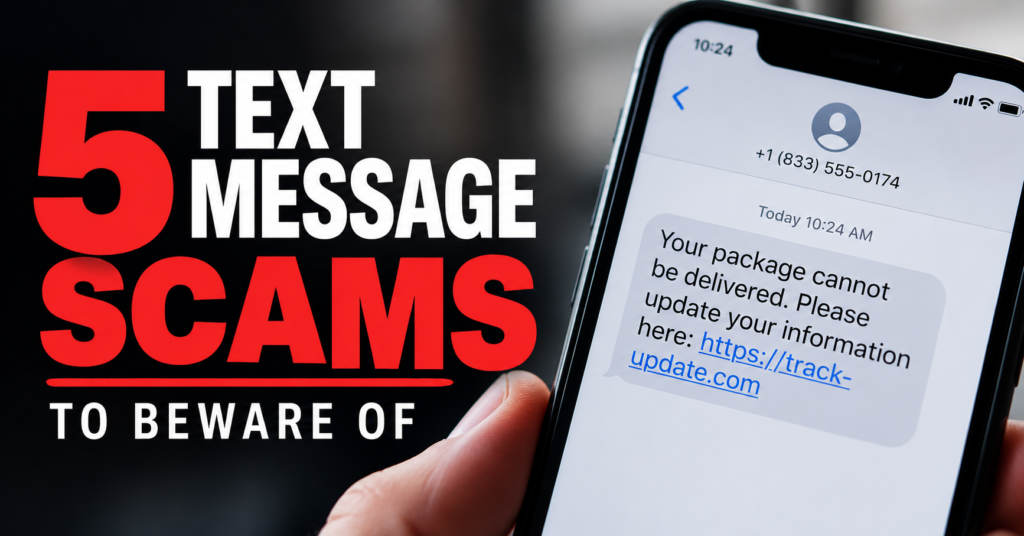
Think twice before clicking that link! Scammers are sending increasingly convincing text messages pretending to be delivery companies, banks, employers, and government agencies.
Your phone buzzes with an unexpected message. Maybe you have a package waiting, an unpaid toll, or a suspicious charge on your bank account.
But is the message real?
According to the Federal Trade Commission (FTC), consumers reported losing $470 million to scams that began with text messages in 2024, more than five times the amount reported in 2020.
In a May 2026 consumer alert, the FTC reported that text messages were the most frequently reported initial contact method used by scammers in 2025.
Here are five common text scams consumers should recognize.
🔴 1. Fake Package Delivery Texts
You receive a message claiming to be from USPS, FedEx, or another delivery company.
It says your package cannot be delivered because of an incorrect address or unpaid shipping fee.
The message includes a link to update your information.
The scam: The link takes you to a fake website designed to steal payment details and personal information.
Protect yourself: Check package tracking directly through the retailer or delivery company’s official website.
🔴 2. Unpaid Toll Road Scams
A text claims you owe money for an unpaid highway toll and warns that additional penalties are coming.
Scammers sometimes impersonate legitimate toll collection services such as E-ZPass or SunPass.
The scam: The message directs you to a fraudulent payment website where criminals collect credit card and personal information.
Protect yourself: Never pay through an unexpected text link. Check your toll account through the official website.
🔴 3. Fake Bank Fraud Alerts
You receive an alarming text message:
“Suspicious transaction detected. Reply YES or NO to confirm this purchase.”
The message appears to come from your bank, credit card company, or a major retailer.
The scam: Responding may connect you with someone impersonating a fraud department representative who attempts to obtain account information or persuade you to transfer money.
Protect yourself: Contact your bank using the number on the back of your card or its official app.
🔴 4. Fake Job Offers
An unexpected text offers easy work-from-home employment with attractive pay.
In an April 2026 warning, the FTC described scammers posing as recruiters for recognizable companies and asking recipients to reply “YES” or “INTERESTED.”
Some offer simple online tasks such as rating products or completing assignments.
The scam: Eventually, victims are instructed to deposit money, pay fees, or purchase cryptocurrency to unlock supposed earnings.
Protect yourself: Never pay money to receive a job or withdraw promised wages.
🔴 5. Wrong Number Text Scams
You receive an innocent-looking message such as:
“Hey Sarah, are we still meeting for dinner tonight?”
When you respond that the sender has the wrong number, they apologize and begin a friendly conversation.
The scam: Some fraudsters gradually build friendships or romantic relationships before introducing fraudulent investments or requesting money.
Protect yourself: Avoid continuing conversations with unfamiliar numbers, especially when strangers introduce financial opportunities.
🛑 What to Do When You Receive a Suspicious Text
The FTC recommends several simple precautions:
- Don’t click unexpected links, even when messages appear urgent.
- Don’t reply to suspicious messages.
- Never share passwords, verification codes, or financial information.
- Verify suspicious claims using official company websites or telephone numbers.
- Use your phone’s Report Junk feature or forward suspicious messages to 7726 (SPAM).
- Report suspected fraud at ReportFraud.ftc.gov.
If you’ve already provided payment details, contact your bank or credit card company immediately.
Got Ripped Off? Tell the World.
RipOffWire helps consumers learn about scams, recognize warning signs, and share experiences involving questionable business practices.
Have you encountered a suspicious text message, online scam, or unresolved consumer dispute?
Visit RipOffWire.com to share your experience and help others stay informed.
Stay alert. Protect your money. Don’t let scammers get the last word.
Sources: Federal Trade Commission consumer alerts and fraud reporting data, 2025–2026.