
Social Media Scam Alert: Americans Lost $2.1 Billion to Scams That Started on Social Media
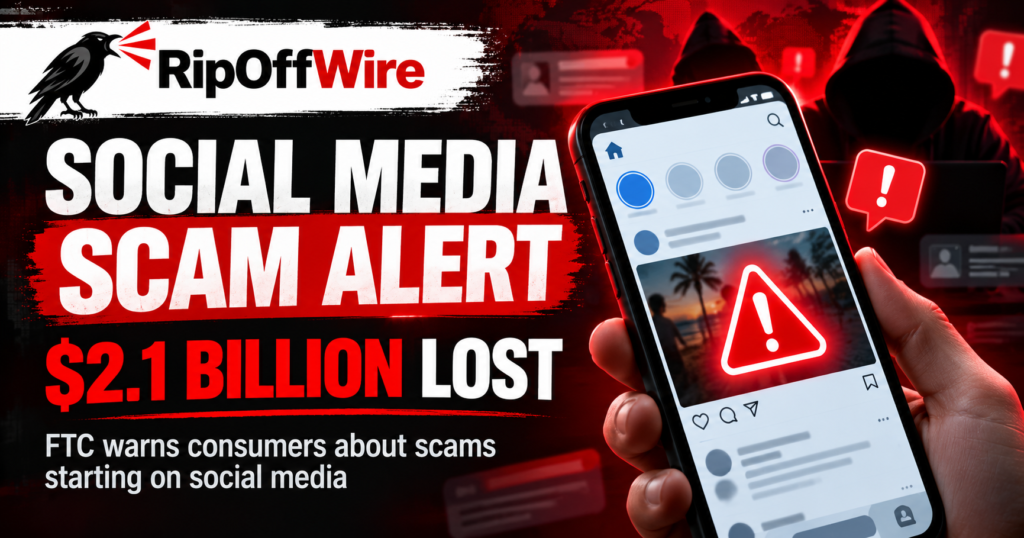
Fake shopping ads, investment schemes, and impersonation scams are targeting Facebook, Instagram, and other social media users.
Social media is becoming a major hunting ground for scammers, and federal officials are warning Americans to be increasingly cautious about advertisements, private messages, and offers that appear too good to be true.
According to an April 27, 2026, report from the Federal Trade Commission (FTC), consumers reported losing $2.1 billion in 2025 to scams that began on social media.
Three Scams Consumers Should Watch For
🔴 1. Fake Shopping Ads
Scammers advertise popular products at unusually low prices, sometimes impersonating legitimate retailers. Consumers may receive counterfeit merchandise, incorrect items, or nothing at all.
In an August 10 alert, the FTC warned that advertisements appearing on social media are not necessarily legitimate simply because a platform displays them.
🔴 2. Investment and Romance Scams
Fraudsters use social media advertisements, fake testimonials, and fabricated romantic relationships to persuade victims to invest money through fraudulent websites.
The FTC reported that investment schemes accounted for more than half of the reported financial losses from scams originating on social media in 2025.
🔴 3. Fake Messages and Account Access Scams
In a September 1, 2026, warning, the FBI described criminals impersonating trusted people and organizations through messaging applications.
Some messages contain links requesting permission to access online accounts. Granting that permission can allow criminals to compromise accounts without directly obtaining passwords.
How to Protect Yourself
- Research unfamiliar sellers before purchasing.
- Be suspicious of unusually low prices and guaranteed investment profits.
- Never grant account access through unexpected messages.
- Avoid sending money to people you’ve only met online.
- Report suspected fraud to the FTC at ReportFraud.ftc.gov.
Got Ripped Off? Tell the World.
RipOffWire provides a platform for consumers to share complaints about businesses, products, and services.
If you’ve experienced a suspected scam or unresolved business dispute, visit RipOffWire.com to share your experience.
Sources: Federal Trade Commission consumer alerts, April 27 and August 10, 2026; FBI Internet Crime Complaint Center advisory, September 1, 2026.